01
Standard admission
- Best for
- Visitors who want to explore the paid upper-gallery route independently
- Things to know
- The currently published standard visitor-area admission is EUR 25.

Independent visitor guide
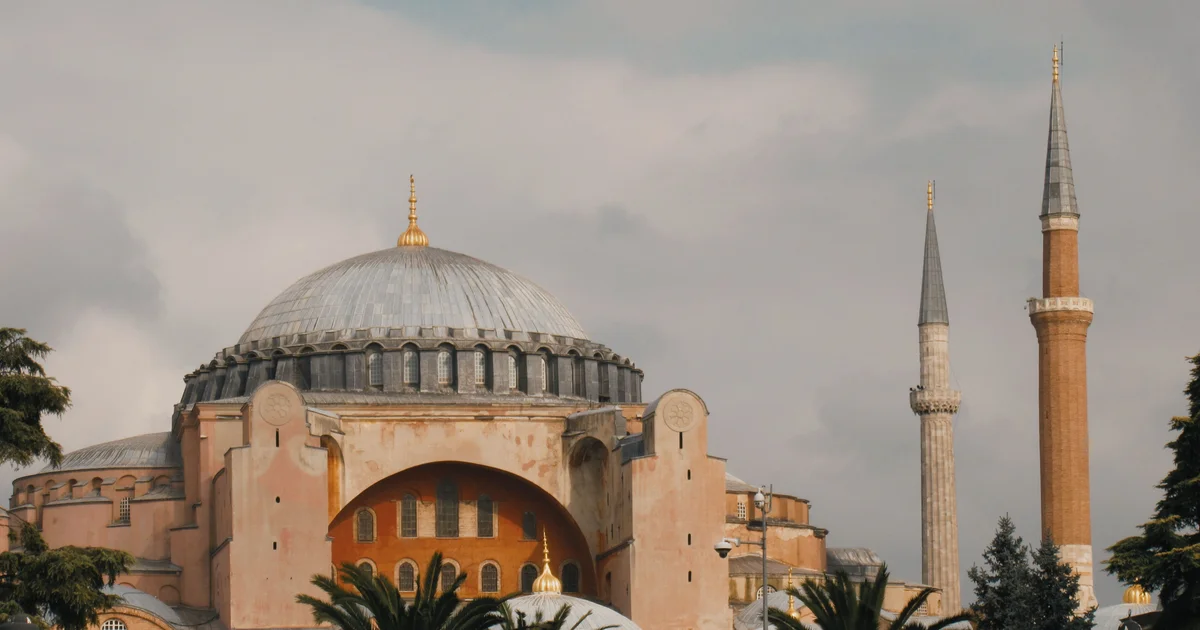
Hagia Sophia Grand Mosque in Sultanahmet. Visitor routes and visible areas may change during restoration.
Hagia Sophia tickets are required for the paid tourist route through the upper gallery. The ground-floor worship area and the ticketed visitor gallery operate as separate zones.
Quick ticket decision
| Option | Best for | Things to know |
|---|---|---|
| Standard admission | Visitors who want to explore the paid upper-gallery route independently | The currently published standard visitor-area admission is EUR 25. |
| Hosted entry | Visitors who want help locating the entrance and using their ticket | Host assistance is not the same as a live guided tour. Security remains mandatory. |
| Guided tour | Visitors who want historical and architectural interpretation | Confirm whether the guide enters the visitor gallery and whether admission is included. |
| Combination ticket | Travelers also visiting nearby Historic Peninsula attractions | Check that every named attraction has a separate, clearly listed admission. |
01
02
03
04
Current admission
The standard ticket applies to the tourist route through the upper gallery rather than the ground-floor prayer area.
Children under eight are currently admitted free when valid identification is presented. QR-based audio information is available through the visitor system.
Do not assume ordinary Museum Pass admission is included; a separate Hagia Sophia tariff may apply. Ticket rules and prices can change, so confirm the final amount and inclusions before booking.
The Ministry visitor-route and admission announcement, published on 12 January 2024, introduced the EUR 25 admission charge for foreign tourists.
Visitor zones
The ground floor is an active worship area. Cultural visitors should not assume that a tourist ticket provides unrestricted access to the prayer floor.
The upper gallery is the principal paid tourist route, designed to let visitors experience the architecture and mosaics while protecting the atmosphere of the mosque.
Current visitor information
Check the current visitor-area operator guidance on the day of your visit, especially on Fridays and religious holidays.
Finding the entrance
Follow signs for the visitor area and staff instructions. Do not use the worship entrance as a cultural visitor route.
During busy periods, allow extra time for ticket checks, security screening, dress-code compliance and temporary restoration diversions.
Restoration status
The Turkish tourism portal reports that the gallery floor was cleaned, maintained and reopened. Restoration and structural reinforcement now involve the dome, minarets, marble surfaces and mosaics.
A large internal steel platform and protective structures support the dome work. These interventions allow worship and visiting to continue, but some views may be obscured.
Read the current gallery and dome restoration update and the Ministry restoration announcement.
Architecture and art
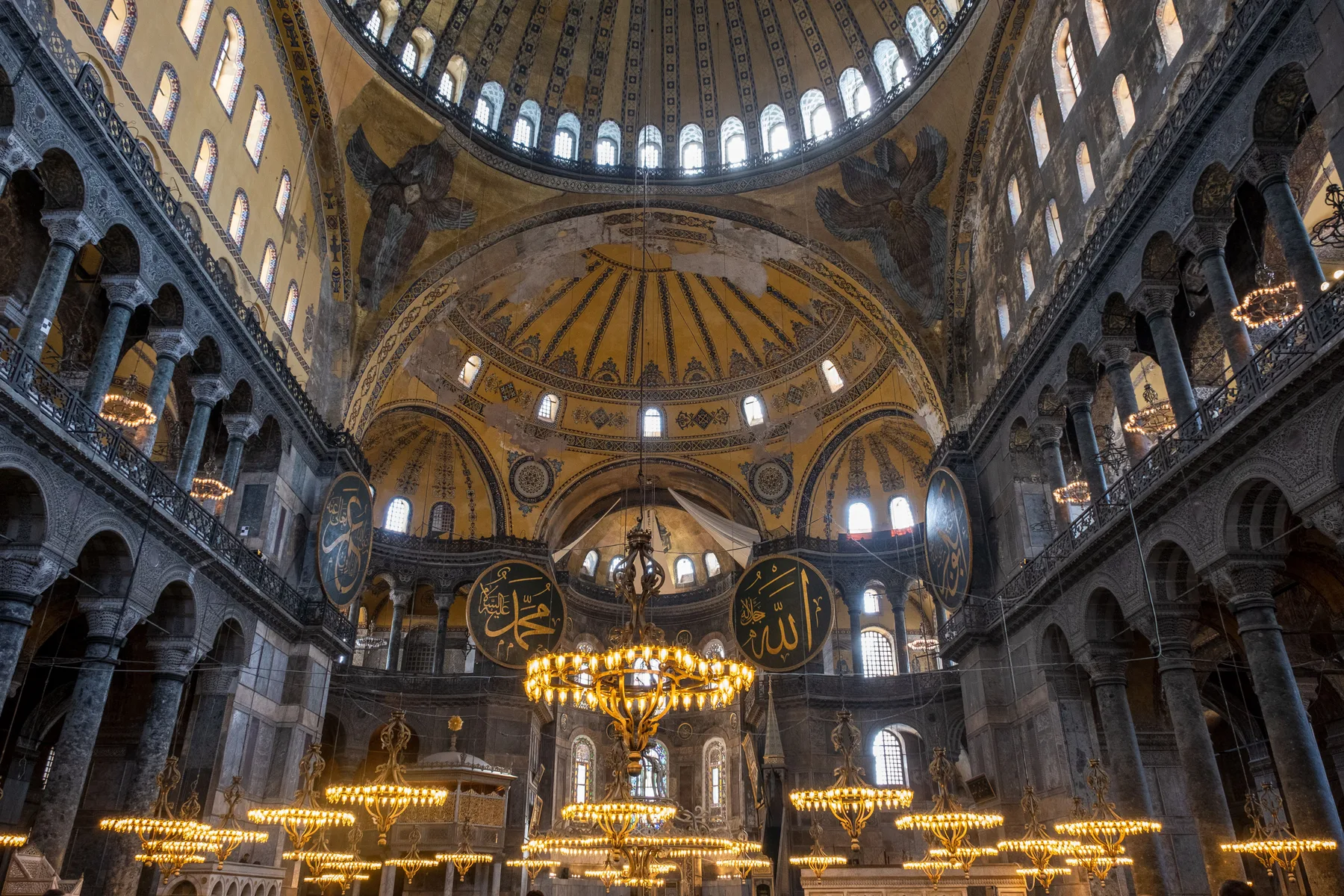
The gallery route can provide views of the Deesis Mosaic, imperial mosaics, the apse image of the Virgin and Child and seraphim figures. Visibility depends on the active restoration phase.
Built between 532 and 537 under Emperor Justinian I, Hagia Sophia was designed by Anthemius of Tralles and Isidore of Miletus. It forms part of the UNESCO-listed Historic Areas of Istanbul.
Mosque etiquette
Inside the monument
Self-guided interpretation
The original government visitor-management announcement described information in 23 languages using visitors' own headphones or disposable headphones available on site.
Audio-guide availability and product inclusions can change. Confirm what is included with the ticket you select.
Before purchasing
For Hagia Sophia's history and architecture, consult the Ministry's official Hagia Sophia information page.
A guided tour can add context about the building's Byzantine, Ottoman and modern periods. Confirm the language, duration and whether interior admission is included.
Expert interpretation
A knowledgeable guide can explain the building's construction under Justinian I, the engineering of its dome, its role as an Eastern Roman cathedral and its later Ottoman additions.
Guided interpretation can also connect the Byzantine mosaics with the mihrab, minbar, minarets and calligraphy added during the Ottoman period, as well as the building's museum years and its return to mosque use in 2020.
Timing your visit
Avoid Friday midday prayer, major religious holidays, the busiest middle part of the day and arriving shortly before closing. Keep your itinerary flexible during restoration.
Allow approximately 60-90 minutes when the upper-gallery route and audio information are fully available. A partial route may take less time; a detailed guided visit may take longer.
Access planning
Visitors with limited mobility should confirm current conditions before purchasing a non-refundable ticket. Do not assume every part of the gallery route is wheelchair accessible.
Separate experiences
Choose the monument when your priority is experiencing the historic building and its current visitor route.
Choose the separate museum for structured historical interpretation, immersive displays and an alternative when monument visibility is limited.
Historic Peninsula
FAQ
The tourist visitor area is not free. The standard published admission price is EUR 25. The ground-floor worship area follows separate access rules.
The standard full ticket price is currently EUR 25 per person. Check the final price before booking because tariffs can change.
Current Turkish tourism information says the gallery floor was cleaned, maintained and reopened to visitors. Major restoration work continues, so temporary restrictions and reduced visibility remain possible.
The ground floor is principally reserved for worship. Tourists are normally directed to the paid upper-gallery route.
Yes. Cultural visitors of all faiths can use the designated tourist route, subject to security, dress and access rules.
Hagia Sophia remains an active mosque. Current operator guidance lists a tourist closure around Friday congregational prayer, approximately 12:30-14:30. Check the schedule before travelling.
Do not assume ordinary Museum Pass admission provides free entry. A separate Hagia Sophia tariff may apply, so confirm the current pass and admission rules before buying.
Advance booking can be helpful during busy periods, but always review the product conditions. Restoration or religious services can affect access even when you hold a ticket.
Some tickets may avoid the ticket-purchase queue. Mandatory security screening cannot be skipped.
The standard visitor system has included QR-based multilingual audio information. Confirm the current inclusion when selecting your ticket.
Women should cover their shoulders and knees and bring a headscarf. Head covering is especially important when entering worship areas.
It can still be worthwhile because of the monument's historical importance and architecture. Restoration may obscure parts of the dome, mosaics or interior views, so check current conditions if unobstructed art viewing is your priority.
Sources and verification
Continue planning